

The Inner Archive
Self-Authorship II: Mining the inherited stories that shape us

In “Storykeeper,” the first installment of the Self-Authorship Series, we explored how ancestral archiving and material memory become ways of gathering the fragments of ourselves: our lineage, migrations, inheritances, and the cultural influences that shape who we are.
In Part II, “The Inner Archive,” we begin to sift through the stories we have inherited: our familial patterns, cultural conditioning, emotional landscapes, and the identities we formed within them. Part of mining one’s life for story is also learning to discern what no longer fits. Some stories guide us toward self-discovery, but not every story is meant to accompany us for life.
Below, I share an excerpt from an unpublished memoir chapter, Ganga Yamuna, as well as a piece from my paid subscriber archive.
Listen to my reading of this piece here, cut off a bit early because a big motorcycle gang woke Ara up.
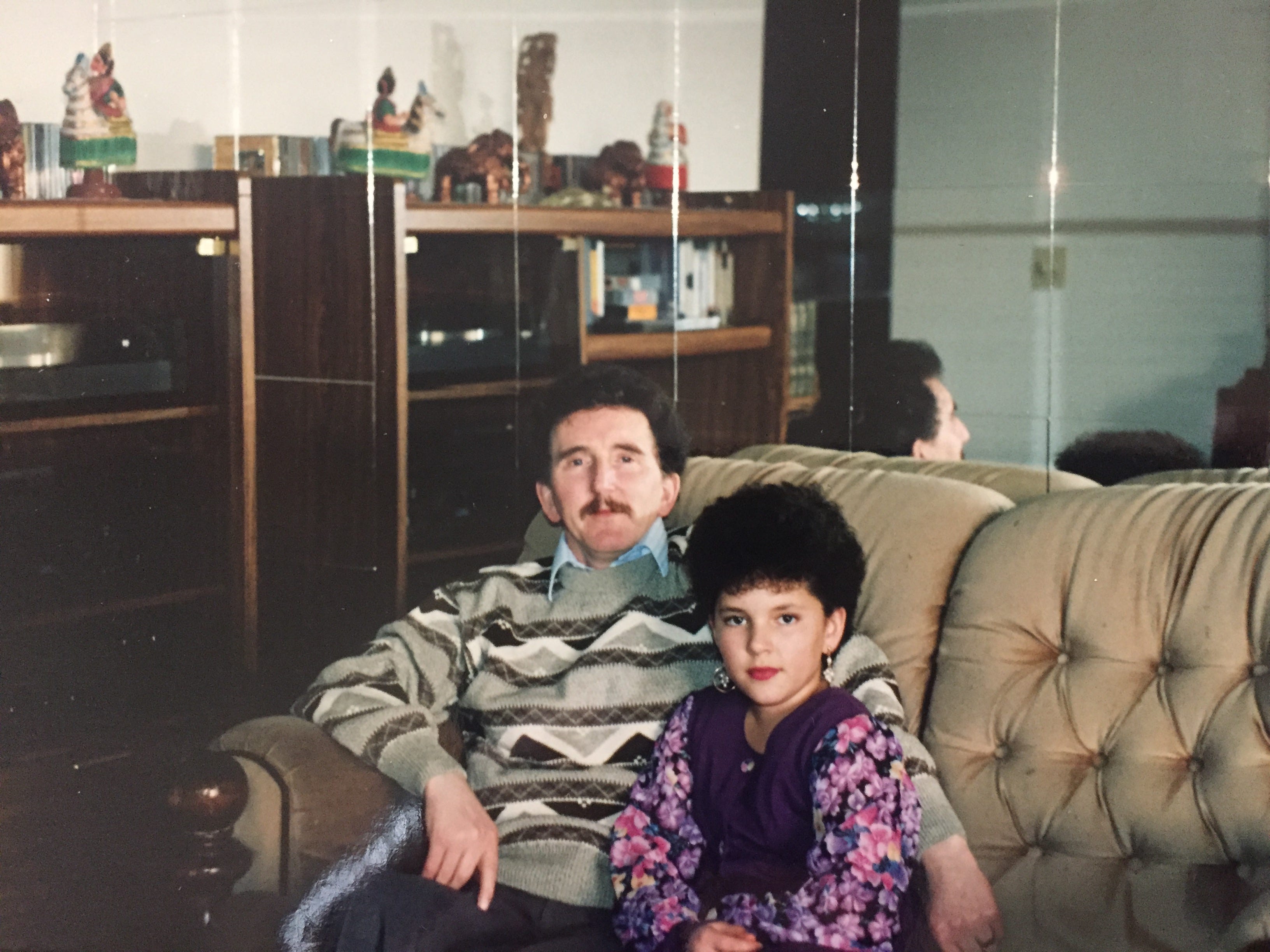
IT WAS IN ONE of Calgary’s first Indian grocers in the late seventies that my father saw a large poster advertising music classes with Aashish Khan, the son of sarod maestro Ali Akbar Khan, grandson of the great Baba Allauddin Khan of the Maihar Gharana. For an hour and a half each week, he brought his silver flute to a rented room at the Mount Royal College campus in Calgary, where Aashish taught a small group of students the twelfth-century system of Hindustani classical music. Aashish soon convinced my father to trade the flute for the sitar, an elegant stringed instrument with its long teakwood neck flanked by two large pumpkin gourds and sympathetic strings running beneath the frets. By 1979, his dedicated study had secured him a place alongside Aashish Khan on a Cable 10 network special. It was a time in the West when sitars were rare and exotic creatures. The sitar would be the gateway to my dad’s travels to India, where he would find himself in Calcutta at one of Ali Akbar Khan’s infamous artist parties. He spent time at the Theosophical Society in Madras, in the shade of giant banyan trees, listening to classical Southern Indian musicians play instruments like the veena. By then, the thick wire strings of the sitar had already pierced his fingertips till they bled enough times to leave them hardened with deep grooves.
In a tea shop in Chennai—then Madras—he courted a shy Indian woman who often pulled the pallu of her sari over her head and had no idea he had plans to ask her father to marry him after only meeting a few times with groups of her friends. Against all odds, my mother accepted the rare and unknown adventure that would bring her to Canada, where my father had immigrated almost a decade earlier. Growing up, my Canadian home was a perfectly preserved replica of the glory days in India; sumptuous curries simmered on the stove, traditional Indian art hung on the walls, and every night my dad played his sitar. My father would serve on the board of the newly formed Raga Mala Society, an organization that connected the South Asian community in Calgary with the musical traditions of their motherland. Despite having pale skin that burns easily in the sun and a challenging accent to the untrained ear, my father organized little-known Indian musicians to play for small audiences of devoted classical music buffs. At our home, he rolled out a silk Kashmiri carpet nightly after dinner and sat with his right ankle on his left knee, resting the lower ball of the sitar against the sole of his left foot. The silver frets and carved wooden knobs of his instrument’s neck shook from side to side as the intensity of his playing heightened. His connection to the music was mesmerizing and disturbing. It took him to a place I didn’t know how to access, and he never invited me, leaving me with an inferiority complex that persisted into adulthood.
As a child, I loathed the sitar for its obsessive grip on my father. I had wished to be musical like him, and although my father taught Indian kids the sitar in our house in Canada a couple of nights a week, he never once offered to teach me his most beloved instrument, and I dared not ask. I guessed it was because I quit almost everything I tried to learn, and the sitar required a level of discipline that I wasn’t known for.
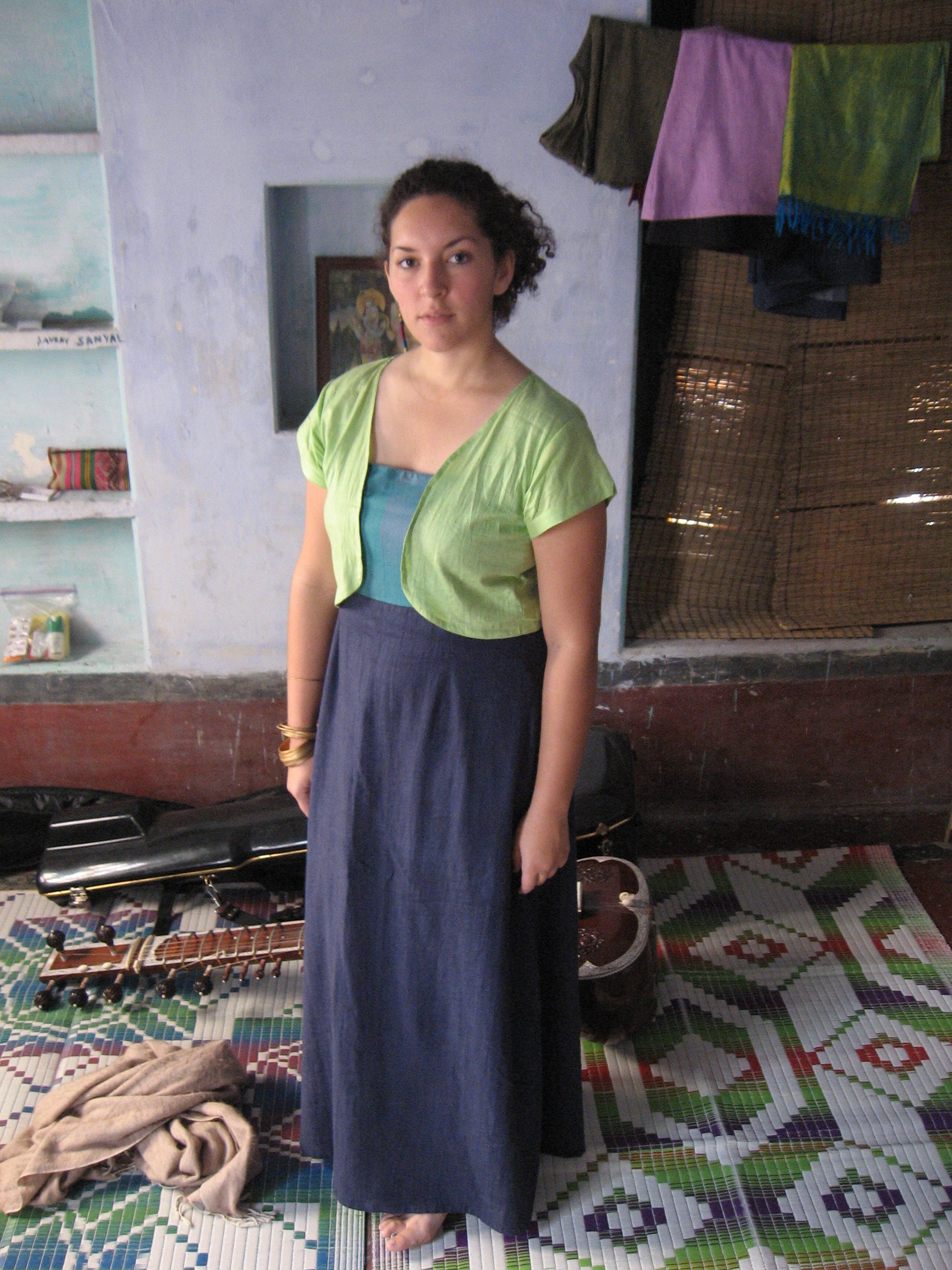
WHAT THIS STORY GOES ON TO TELL is my journey across Asia to the holy Hindu city of Banaras, on the banks of the revered Ganga, a twin river to the Yamuna, my namesake and the seat of Hindustani classical music. In a fortune-telling reading many months before I crossed the threshold of this sacred city, I was told by the psychic that I had once been a sitar-playing court musician in a medieval-era past life alongside my father. The unfathomable coincidence that this clairvoyant would have had no way of knowing, neither by story nor by my father’s name, Thomas Flaherty, became the impetus of my journey to India to discover if I “had music in my hands,” as she insisted.
And this is precisely where the fragments of our cultural inheritance intersect with our inner archives, the rich, numinous vault of story within us that becomes the symbolic architecture of our self-authorship. In that psychic reading, something ancient was activated in me that felt woven like threads throughout my very existence. I knew that I would go and meet whatever awaited me on the sacred shores of the Ganga, as both an act of cultural inheritance and an attempt to make sense of my own story.
I did find a guru and bought myself a sitar, and although my foray into Indian classical music ended quickly under the instrument’s difficulty and physical weight, what happens in Banaras is quite magical. And it didn’t end there.
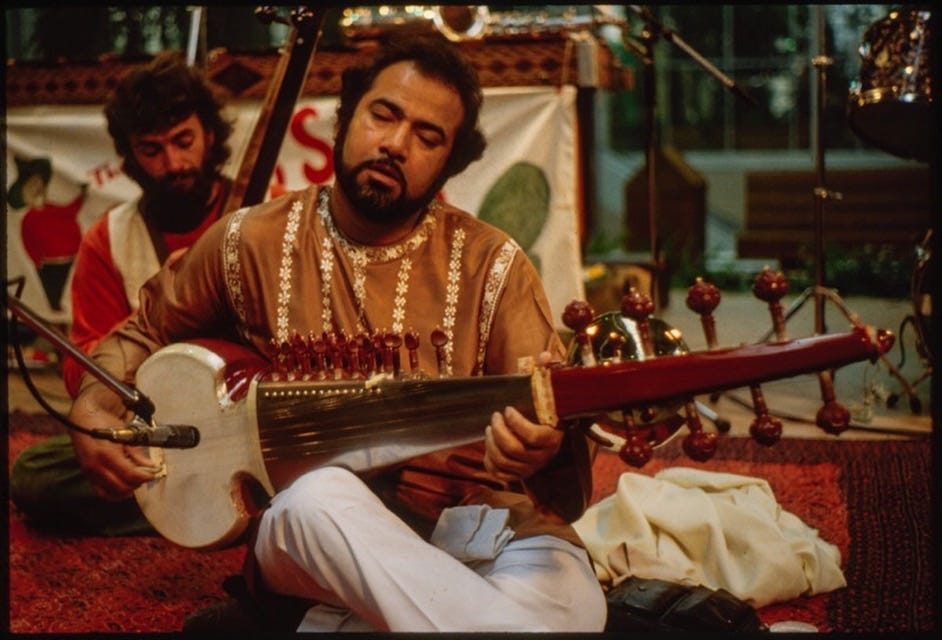
TWELVE YEARS LATER, my dad hands me a small plastic container with fifteen slides. I pull one out and hold it up to the light. I see a tiny brown man wearing a red kurta, strumming a stringed instrument with that same look of trance on his face I once saw in my father’s.
“Who is this?” I ask.
“Aashish Khan.”
My father had photographed the slides in the early eighties when Aashish was still youthful with a full head of hair. It was my first time actually seeing this moment of his life through his lens.
I had spent so many years tracing my matrilineal roots in India that I hardly realized my Scottish father had roots there, too.
I immediately searched for Aashish Khan on the internet and found a webpage. The first thing that popped up was a list of his concert dates. I scrolled the list, and my eyes widened when I saw the words, ‘Habitat Centre in Delhi, January 14th, 2017.’ I already had a plane ticket booked to the capital and planned to be in the city precisely on the night he was going to play.
I quickly gave the slides to a friend with a homemade photo studio who made 8 x 10 prints of the young Aashish. Once again, it felt as though timelines would collide in my Motherland, where my origin story began. I was determined to meet Aashish who had once known me as a little girl. Now a man of almost 80 years, I wondered if he would remember my father after all these years.
As planned, in the biting cold of a January night in Delhi, I sat in the plush red seats of the Stein Auditorium, fighting the urge to close my eyes and sleep. An equally jet-lagged Aashish appeared after customary introductions, looking just as he did in the slides, except his hair had grown out long and white. As I peered through the darkness at him, illuminated on the stage, I plotted how I would patiently wait for the crowds to disperse and approach Ustaad-ji with a small photo of my youthful father to jog his memory and a packet of his images I’d carried with me for this very occasion.
When the moment finally came, I was one of the last audience members in line to greet and thank Aashish for his concert. I introduced myself and said my father’s name, which only produced a look of vague recognition. But when I pulled out the images of his younger self in concert, a broad smile swept his face.
“How is your father? Where is he now?” He asked.
Ustaad-ji thumbed through the portraits and then tried to hand them back. I pushed them back into his hands, “They are for you.”
He gave me his card and told me to pass it on to my father. I knew my father wouldn’t make any contact, as he is a man who lets the past be the past. But I took it anyway and asked for a photo with him.
We both stood shoulder to shoulder, looking into the lens in that brief window of time before he vanished behind the curtains. I was certain our reunion was much less significant to him than it was to me.
For me, it was the fruit of a seed planted generations before, a meeting with a character who is a part of my life story, the closing of a circle.


Self Excavation
What I have come to understand is that the inner archive does not speak in straight lines.
It speaks through recurring symbols, obsessions, longings, chance encounters, places we feel irrationally drawn toward, stories that follow us across decades, and the people who seem to reappear throughout the architecture of our becoming.
Part of self-authorship is learning to pay attention to these threads.
Not every inherited story belongs to us forever. Some identities are worn for survival. Some narratives dissolve once they have guided us where we needed to go. Others deepen over time, becoming symbolic touchstones in the ongoing excavation of the self.
For the memoirist, the artist, and the seeker, mining one’s life for story is less about constructing a perfect narrative than learning to recognize patterns of meaning.
The stories that persist are often trying to tell us something.
Journal Prompts for your Exploration
What story has followed you your entire life?
Which symbols, places, or memories recur throughout your personal mythology?
What emotional inheritance shaped your identity?
Which inherited narratives no longer fit who you are becoming?
What obsessions or longings might contain deeper meaning?
What stories are you still trying to make sense of?
What parts of yourself only become visible in hindsight?

Next week, in the final installment of the Self-Authorship Series, I’ll explore what happens after excavation: how we begin to consciously author a life from the fragments we inherit, the identities we outgrow, and the stories we choose to carry forward.
PS. There is no podcast episode this week because my car broke down and was in the shop for over a week, which prevented me from getting to town to interview a guest.
PPS. In just a few days I will land in my birthplace, Calgary, Canada, where I will spend the summer with Aramara. There will be so much to share and so much ancestral archival work to be done. I can’t wait!
Happy Sunday,
Yamuna x
Fascinating, Yamuna. The reflective questions at the end add a great deal. (I've got some excavating to do!) I love the way you have interwoven so many threads of heritage, the personal and the cultural details - like the sitar.