

Storykeeper
Part I of the Self-Authorship Series

Welcome to the Self Authorship Series, a three-part exploration of ancestry, identity, and becoming.
Across these pieces, I explore what it means to inherit a lineage, excavate the self hidden beneath inherited narratives, and consciously author a life from the fragments we are given. This series is for the archivists, the seekers, the artists, and anyone trying to understand how identity is shaped across generations, migrations, memory, and story.
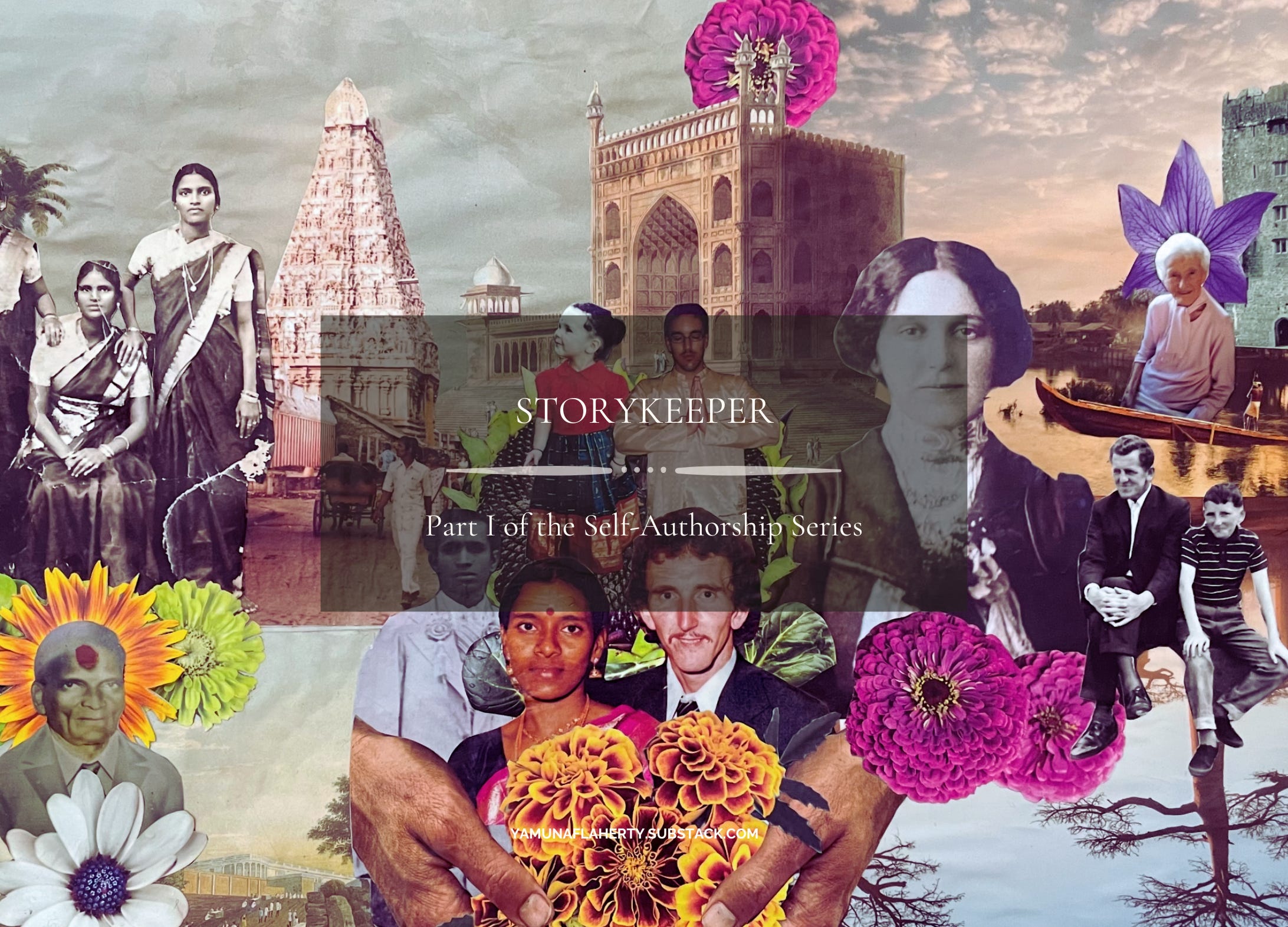
I INHERITED MY STORY IN FRAGMENTS.
I’ve spent my life learning how to collect the pieces and tell the story of who I am.
There is the white Bengali handloom sari my parents fashioned into a hammock for me as a baby, its cotton worn soft with time and touch. My grandfather’s stainless steel rice paddle, still cold and heavy in the hand. My Tamil grandmother’s bottle-cap glasses, which I carried back to Canada after her death, wrapped carefully between my clothes like relics.
In one of my father’s basement boxes sits the oldest black-and-white photographs our family owns: small square prints from the 1960s, their corners curled inward like drying leaves. Faces stare back through silver grain, some names remembered, others long gone.


I have the letters my father once mailed to my mother in Chennai during their long-distance courtship across countries, climates, and tongues. Blue aerograms folded into themselves. Air Mail stamps. Handwriting that belonged to younger versions of them, before migration, marriage and children.
Over the years, I have mapped our family tree like someone trying to chart a lost geography. I have collected dates, migrations, and surnames. Fed my saliva into the tube of Ancestry.com in search of answers that felt both intimate and absurd:
47% Scotland, Ireland, and the UK.
53% Indian Subcontinent.
As though a life could be divided so neatly.
I have stood in the windswept landscape of Connemara, pressing my hand against the old stone walls of my great-grandfather’s house in Camus Oughter. I have traced his migration into Scotland and followed the stories of those who came after him across oceans and generations.

In a noisy food court, I once recorded my father telling me about arriving in Newfoundland, Canada, in 1973. Trays clattered around us. Teenagers shouted over fries and fountain drinks while he quietly recounted the story that altered the course of our entire family line.
I have met my ancestors in ceremony, in the force of medicine moving through the body. I have lit lamps at their altars, fed them fruit and beer and sweets, spoken their names aloud into candle smoke. I have built Day of the Dead altars in their memory and collaged their faces into art, somehow trying to make meaning from inheritance.
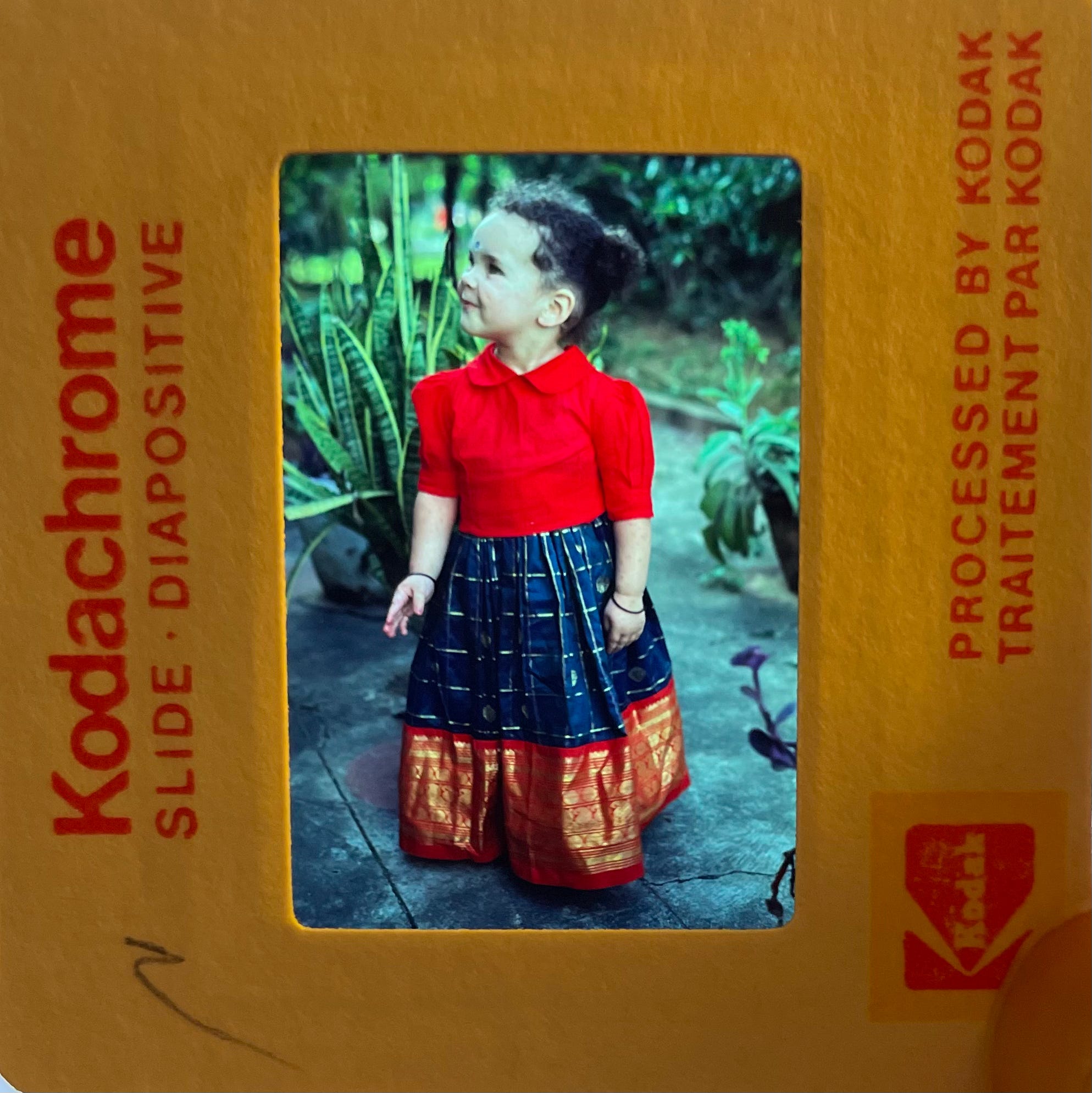
This summer, I plan to digitize hundreds of my father’s slides from the 1980s: faded Kodachrome images of my childhood in multiple countries. I want to convert old cassette tapes of our voices into clean MP3 files before time erases them completely.
Someone, I think, has to remember.
Because before we can author our lives consciously, we must first understand the inheritances, migrations, silences, and stories that authored us.

Things the Storykeeper Preserves
Objects & Heirlooms
clothing and textiles
kitchen tools and domestic objects
eyeglasses, jewelry, handwritten items
objects carried across migration
inherited relics with emotional weight
Family Photographs
preserving old photographs
identifying unnamed relatives
dating photographs
storing physical prints safely
digitizing family images
documenting visual history
Oral Histories
recording parents and elders
interviewing family members
preserving migration stories
capturing voices before they disappear
recording everyday memories, not just major events
Letters & Written Archives
love letters
correspondence across countries
postcards and aerograms
journals and diaries
handwriting as emotional inheritance
Genealogy & Lineage Research
mapping family trees
collecting names and dates
tracing migration routes
researching ancestral villages
DNA ancestry testing
reconstructing fragmented histories
Pilgrimage & Ancestral Travel
visiting ancestral homelands
walking the landscapes ancestors lived on
touching physical remnants of family history
travelling as identity reconstruction
tracing routes of migration
Ritual & Spiritual Practices
ancestor altars
lighting lamps or candles
offerings of food and drink
speaking ancestors’ names aloud
ceremony and ancestral communion
Day of the Dead traditions
creating ritual through memory work
Art as Remembrance
collage
photography
memoir writing
storytelling
mixed media family archives
turning personal history into art
Digital Preservation
scanning slides
converting cassette tapes
digitizing analog media
organizing archives
preserving materials before deterioration
building digital memory collections
How to Begin Preserving Your Lineage
Ancestral archiving begins simply by paying attention.
Below are a few ways to begin preserving the stories, migrations, objects, and memories that shaped your family line.
1. Start with the objects
Choose one item that has been passed down in your family—a piece of jewelry, a cooking utensil, a letter, a photograph, a textile, a religious object. Find out the story behind it. Display it on an altar or shelf, or pack it away safely with other heirlooms.
2. Record the elders now
Do not wait for the “right time.” Use your phone. Sit at the kitchen table. Record the stories in noisy restaurants and parked cars. Take notes of everything you can. Where did they meet? What year did they get married? What was her mother’s name? Small details can later be used to infuse a story with rich observation.
3. Label the photographs and journals
I spent one summer photographing every diary page I have ever written, so I have my words with me whenever I need to fact-check my stories. It is tedious work, but labelling photos, diaries, and objects with timestamps, names, and other relevant information can help in your preservation work. Go the extra mile by putting things in albums, creating folders on your laptop, and categorizing your work as much as possible.
4. Create Ritual
Light a candle. Speak their names aloud. Build an altar. Cook their food. Visit the places they once lived. Tell their stories to your children. You can create a living thread to your ancestral heritage by activating ritual as a form of remembrance.
Resources for Further Exploration
In David Perell’s fantastic podcast, How I Write, he sits down with Maria Popova to discuss why writers should visit public archives, what diaries reveal, and presence over productivity. I was especially struck by her reminder that the internet is not all that there is and that so much of what humans have thought, felt and created is in archives in university basements and libraries.
The great oral historian and writer, Aanchal Malhotra, co-founded the Museum of Material Memory, a crowdsourced digital repository of material culture of the Indian subcontinent, tracing family histories and social ethnography through heirlooms, collectibles and objects of antiquity. Her book, Remnants of a Separation, is the next one on my shelf to read.
Latcho Drom is a film by Tony Gatlif that traces the migration of the Romani people from Rajasthan in western India to Spain through the musical traditions carried across generations and borders. Though often categorized as a documentary, the film contains very little dialogue, unfolding instead as a living archive of Romani music and culture across the world. This is a link to the full film. Don’t miss it.
Next week, in Part II of this series, I’ll explore what happens after we inherit the archive: how memory, migration, family systems, selfhood, travel, and emotional inheritance shape the inner self. If this essay is about gathering the fragments of where we come from, the next one is about learning to read the stories those fragments wrote inside us. We will move from the family archive into the inner archive—the layered, often invisible narratives that shape identity, belonging, and the lifelong process of coming home to ourselves.
In self discovery,
Yamuna
Thank you for posting the Roma film. Wow! I am sure they came from India.